

Concrete Sidewalks in Central Illinois
Connect the places people need to reach with a considered walkway layout.
Connect the places people need to reach
A walkway becomes part of a daily routine: reaching the front door, carrying something from the garage, or moving between a patio and the rest of the yard. Its usefulness depends on the route and the connections at each end, not just the appearance of the concrete in the middle.
JLP offers new and replacement concrete sidewalks for residential and commercial properties. A new route can connect areas that are awkward to reach today. Replacement can address an existing walk while giving you a chance to reconsider its outline and the surfaces it meets.
Think about who uses the route and what they carry or move along it. Doors, gates, parked vehicles, and landscaping can affect the available space. Discuss the whole journey so a proposed walk relates to the actual property rather than ending at an inconvenient spot.

What do you notice along the existing walk?
These observations help describe the work. They do not diagnose the cause or establish a repair method.
Changes in level
Point out uneven transitions between sections or where the walk meets a step, driveway, or entry. Include the surfaces that will remain so the connection can be reviewed.
Broken sections and edges
Show both the damaged area and the concrete around it. The extent and location of the condition help frame the discussion about replacement boundaries.
An indirect or awkward route
A walk may need attention even without visible damage. Explain where people actually travel and where the current route makes that movement difficult.
Narrow points
Note places where a gate, planting bed, parked car, or other feature reduces the usable path. The proposed width needs to be considered at those points as well as in open areas.
Water that stays on the path
Describe where water collects and when you notice it. Surface appearance alone does not explain its source, so include the surrounding ground and nearby connections.
An unclear endpoint
Show how the walk reaches the door, patio, driveway, or public sidewalk. The final connection can affect whether the entire route works as intended.
Give the route a clear shape and a considered finish
Straight and curved routes can serve different settings, but the shape should follow the purpose of the walk. Consider the space around doors, gates, beds, and adjoining concrete. A decorative outline should still leave a practical connection between the places people need to reach.
JLP offers broom, stamped, and decorative concrete. Discuss the appearance and texture appropriate to the proposed walk and the materials beside it. A new section may look different from older concrete, so decide where the transition belongs rather than assuming an exact match.
A private garden path, a business entry route, and work touching a public sidewalk can carry different requirements. Identify the location and use early. Any applicable access, design, or public-connection responsibilities need to be established for the actual project, without treating a general website description as a compliance specification.
If the walk joins the vehicle approach, consider the connection with concrete driveway work as part of the same property discussion.
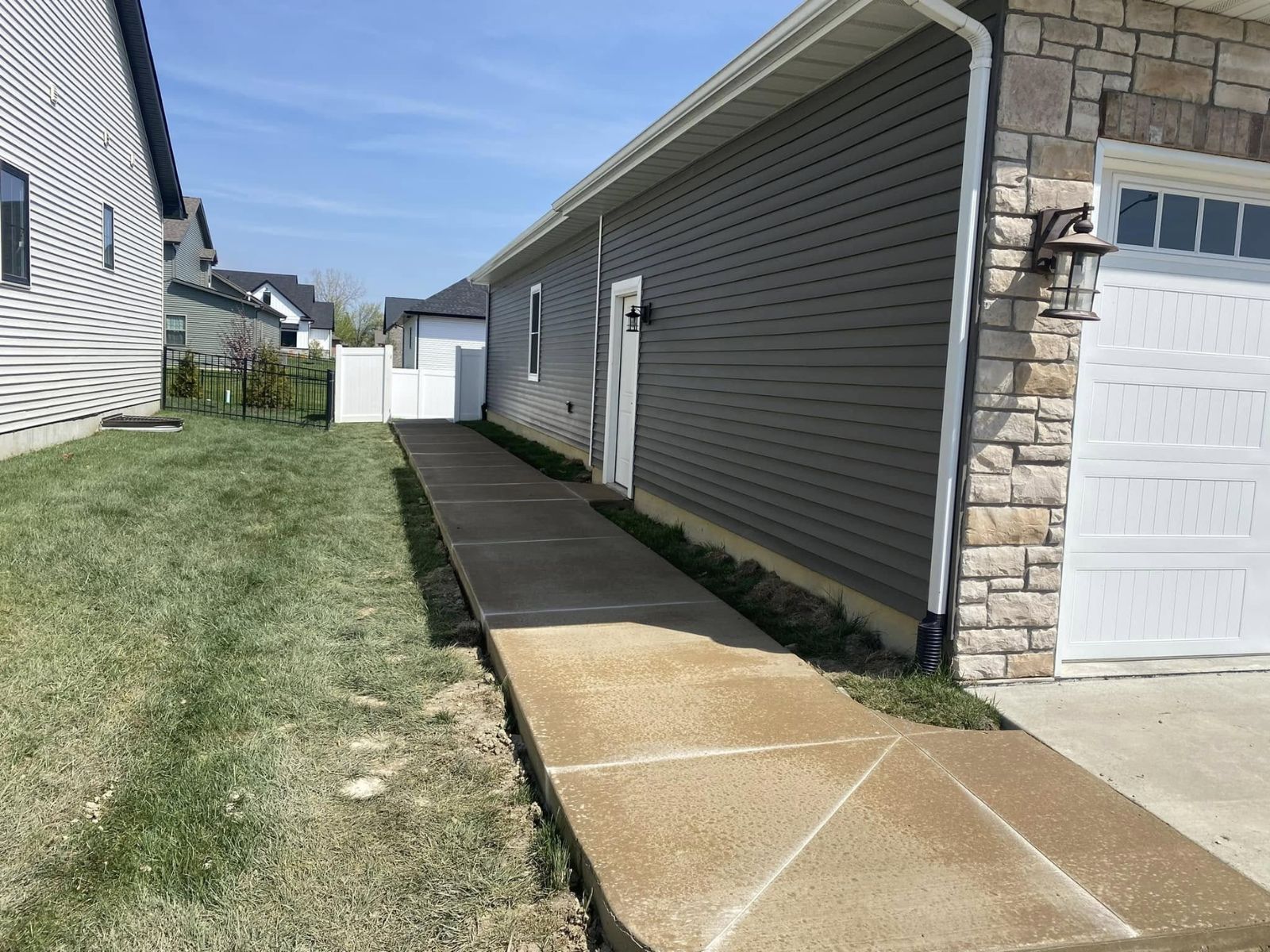
Walk the route before deciding on the outline
Use these four checkpoints to review the proposed connection. This is a property walkthrough, not an installation sequence.
Start
Where does the journey begin? Consider the door, parking area, or existing walk and the room needed to enter the route.
Pass
What sits beside the path? Look at gates, planting, furniture, and parked vehicles with those features in normal use.
Connect
Where does the walk meet another surface? Identify retained edges, steps, and changes in level that affect the proposed work.
Arrive
How does the route finish? Consider door movement, gathering space, and the next direction people need to travel.

A good fit for the paths through your property
JLP’s sidewalk offering connects concrete work with the places people need to reach.
New connections or existing walks
JLP offers new sidewalks and tear-out and replacement. Your request can begin with a missing connection or a walk whose condition or route needs attention.
The complete route in view
Show where people start, where they need to go, and what sits alongside the walk. Doors, gates, and retained concrete give the proposed route its context.
Concrete services on either side
Driveways and patios are also included in JLP’s services. Where a walk meets either surface, those connections can be described together.
Appearance suited to the setting
JLP’s concrete options include broom, stamped, and decorative finishes. Discuss the look with the adjoining property and the way the walking surface will be used.
What JLP customers say
Read customer feedback about working with JLP Concrete.
Concrete Sidewalks FAQs
Practical questions about your project and the next step.
Describe the walk you want to improve
Send the location and photos showing both ends of the route and any damaged transitions. Tell JLP whether you want replacement concrete, a new connection, or work coordinated with another surface.
Phone
(217) 280-1933Areas We Serve
Central Illinois, approximately a two-hour drive of New Berlin. Tell us your project location when you get in touch.